

 Looking back at a remarkable 125th anniversary celebration
Ian Rowley is Harper Adams University's Executive Director for Institutional Impact and Engagement – and had a front-line seat as prep …
Posted 1 October
Looking back at a remarkable 125th anniversary celebration
Ian Rowley is Harper Adams University's Executive Director for Institutional Impact and Engagement – and had a front-line seat as prep …
Posted 1 October
Does loneliness change the way we eat? Anna investigates...
21 May 2020

In this time of social isolation, it is more important than ever to reach out to friends and family. Keeping up to date through a call or text is great for our mental health and keeps communities connected, even when they can’t see one another face to face. It can also keep us motivated to maintain a normal routine and diet, keeping our bodies as healthy as our brains.
Understanding this has led Anna Lockley, a final year student studying BSc (Hons) Food Technology with Nutrition, into an interesting field of study for her Honours Research Project (HRP): investigating how loneliness impacts social, environmental and dietary choices.
Anna chose her dissertation topic due to an interest in nutrition and wellbeing across different age groups. She said: “The decision to focus on the elderly came from day to day life experiences - I have always had lots of interactions with my elderly relatives. With the elderly community living longer and becoming a larger percentage of the overall population, I wanted to research the idea of loneliness in the demographic. Having seen the impact of loneliness on the eldery, I wanted to know how much this was influenced by social, environmental and, subsequently, dietary factors.”
With a focus on nutrition, Anna was keen to understand how food plays a part in loneliness. She explained: “Nutrition not only focuses on diet, but on the wellbeing of individuals. Feelings of loneliness can impact what food we eat and how we eat.” By focusing on a specific demographic, Anna has been able to attribute her results to social and environmental impacts alongside dietary shifts.
Anna’s data was collected through interview methods, gaining original sources of information to inform her thesis. She commented: “My degree course set the groundwork for me to be able to interview and acquire the most useful data. The extra support session run by the academic guidance teams as well as the research methods modules has allowed me to approach my dissertation interviews in the most ethical way, acknowledging the sensitivity of the topic and enabling me to interpret the vast qualitative data gathered.
“Unfortunately, Covid-19 is out of everyone's control and my dissertation has suffered from this. I have been unable to interview as many participants as I would have liked. However, I have been able to adapt; I have really synthesised my data and ensured every statement has been coded and analysed to provide strong support for my dissertation.”
Despite the setback, Anna has achieved some informative data. She commented: “I would very much like my research to further support similar studies and fill the research gaps. Hopefully, this will inform local governments, enabling them to provide the elderly the support that they need.”
To hear more from what our food students are up to, see our other food blogs here. For further information on our undergraduate food course options, please click here.
Related Posts
Looking back at a remarkable 125th anniversary celebration
Ian Rowley is Harper Adams University's Executive Director for Institutional Impact and Engagement – and had a front-line seat as prep …
Posted 1 October
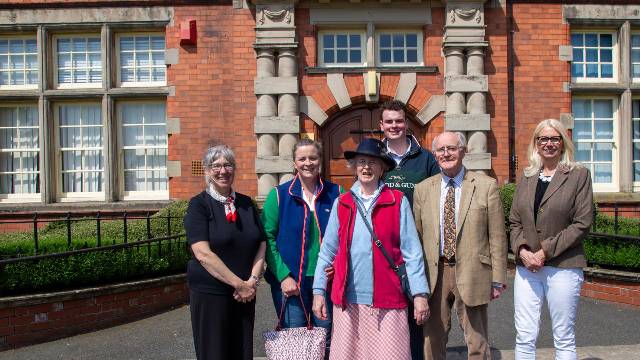 Iconic dog trainer Barbara Woodhouse's legacy lives on at Harper Adams through her great-grandson
For many, Barbara Woodhouse has been a household name over the years for her approach to training our beloved four-legged friends.The …
Posted 30 September
Iconic dog trainer Barbara Woodhouse's legacy lives on at Harper Adams through her great-grandson
For many, Barbara Woodhouse has been a household name over the years for her approach to training our beloved four-legged friends.The …
Posted 30 September
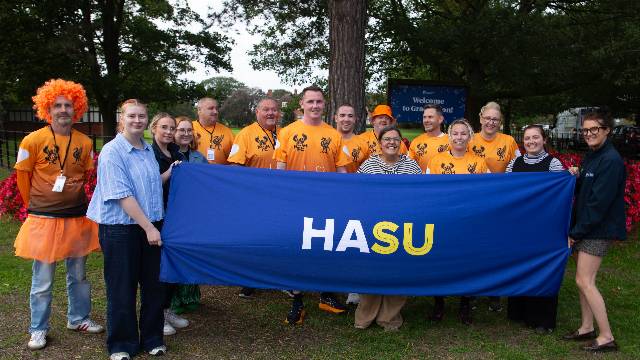 University welcomes awareness-raising meningitis B run
A runner who undertook a 100-mile challenge between two football stadiums to raise awareness of meningitis B has completed his trip.Sha …
Posted 22 September
University welcomes awareness-raising meningitis B run
A runner who undertook a 100-mile challenge between two football stadiums to raise awareness of meningitis B has completed his trip.Sha …
Posted 22 September
 Student Choice Awards 2026 celebrate the best in learning and teaching support
An annual awards ceremony to celebrate excellent learning and teaching support has been held at Harper Adams University.The awards are shape …
Posted 9 September
Student Choice Awards 2026 celebrate the best in learning and teaching support
An annual awards ceremony to celebrate excellent learning and teaching support has been held at Harper Adams University.The awards are shape …
Posted 9 September